Showing posts with label wheelchair. Show all posts

Wednesday, 5 August 2020

Covid-19 and Disability: A Whole New World

A photo of Melissa's head and shoulders. She is smiling and there are trees in the background. Melissa is wearing a medium blue top with small purple and flowers on it.
It has been a long time since I last wrote a blog post. This is due to our family life becoming busier with our son starting secondary school and balancing work and everyday life. This post is a bit longer than usual so you may wish to get a cup of tea! 

Since covid-19 has reached the UK, our life has changed quite a lot but at the same time, maybe not as much as other people. The biggest change was when the schools were closed on 20th March 2020. It was a scary time because no one knew how long it would be for and it was unnerving to think that our lives were being limited without us being able to do anything about it. As it turned out, home learning continued until the summer holidays for our son at secondary school while our primary school aged daughter went back for three weeks at the end of the school year. 

I was included on the shielding list as a clinically extremely vulnerable. I wasn't automatically added but when I was unable to get my usual online grocery shop, I learnt online that the way to get a priority slot was to be added as shielding person. It took a few weeks to get on the priority list and in this time Matthew had to go to the supermarket to get some food. This was concerning because it was increasing our risk to the virus. Once I was able to place online orders it was such as relief although for many weeks there were problems with stock levels. We resorted to buying a 16kg bag each of bread flour, self raising flour and plain flour because we couldn't order regular sizes of them and I do a lot of cooking and baking so they were essential. I was contacted by our county's well-being hub to make sure I had all the essentials I needed including food and medications. It was reassuring to know they are there if I need support. My GP also phoned me which I appreciated.

We adapted to our new situation of all being at home. It is very fortunate that we have an office above our garage that we run our business from which meant our working routine was very similar and the children each had their own desk. It did impact our day though having to help them with schoolwork. It was very exhausting and not easy trying to be motivating in a setting that didn't have the variety they have at school. We managed and kept up with most of the work but it wasn't easy. I do feel lucky that the work I do is based from home and that there is no pressure to go back into a workplace. I think that would be very worrying as the shielding measures were lifted on 1st August. 

When the primary schools started opening, we were pleased because it was that home learning that was the hardest. Unfortunately it was a bit of a challenge to get our daughter back into school, which was completely unexpected. We signed the form saying that we wanted her to go back but were then informed she couldn't join her peers because I was shielding and they couldn't take anyone, staff or pupil, who was from a shielding family. The policy was in place while the social distancing recommendations was two metres and they couldn't guarantee they would maintain two metre distance between the children at all times. This made me rather sad, it didn't seem right that she was being prevented from attending school because of me although I did partly understand the school's position. We had balanced the risks of her bringing covid-19 home with the many positive benefits to her mental health of being back with her peers and decided that returning to school was best for her. It felt very unfair and a barrier to being able to access the same parts of life as everyone else. Some people who were shielding would choose not to send their children to school, and that is completely fine. I just think it should be up to each individual to make the decision themselves based on their circumstances, especially when it isn't the child who is shielding. Thankfully, within a few weeks the guidance for social distancing was reduced to one metre or more which meant that she could return to school.

Shielding has been valuable because helped to ensure that extra support is available to those who need it. It officially lifted on 1st August, although the government say it can be reintroduced at any time if the rates of infection increase. It feels like it lifted too early, especially as it is less than a month after shops, pubs, restaurants etc have opened as well as hairdressers and other areas of the leisure and entertainment industry. We don't yet know the implication of all this easing and people being more mobile around the country and abroad over the summer. It makes me feel even more cautious and wary about my risk of catching the virus. During lockdown I felt safer because everyone was doing the same thing and there was the expectation to stay at home. When out for essential trips people were more likely to keep their distance and there were far fewer people in general. Lockdown has eased and with it people are becoming less cautious. My personal belief is that shielding has been lifted this early because it helps the economy and means that employers can bring people who have shielded back to work as long as they are covid-secure. There is another possible different view that some people are glad shielding has lifted because they have been keen to return to work and couldn't previously because of the restrictions. However, I think it is too early, and from what I have read on social media, I am not alone.

Government guidance regarding shielding has been conflicting, from 6th July they said that you can meet up to six people outside while maintaining social distancing. From 1st August shielding ends and you can visit the shops etc as anyone else would. They still say that you need to adhere to strict social distancing and that where you can, you should stay at home as much as possible to minimise your risk of catching the virus. So, on one hand they are saying that you can lead a life like everyone else, but then on the other, you are advised to stay at home because there is still a big risk for you! We are making our own judgments and staying home. We haven't seen family and friends and haven't visited places because it feels like too much of a risk at the moment.  We are concerned that others aren't keeping a distance or wearing masks and it is also a concern about picking up the virus from touching something. In particular if I needed the loo while out, this would be a big issue because I use all the grab rails, need to push the door with my hand etc. People without a disability would be able to minimise their contact with other surfaces but this is a lot hard for me as a wheelchair user and also visually impaired. 

Melissa is sitting in her electric wheelchair holding up the large multicoloured shawl that she crocheted. She is surrounded by trees and her crutches and long cane are leaning against one tree.
My multicoloured crochet shawl that I finished
We do miss everyone and it's harder now lockdown is over but we keep in touch with FaceTime, Zoom and phone calls. If I were to catch covid-19, I am at greater risk of it affecting me badly and we don't want to take that risk. It would have too much of an impact to our children, family life, business and finances. We are fortunate to live in a home with a garden that we enjoy surrounded by countryside. Also, it's giving us a good opportunity to work on all the decorating that needs doing and I've finished some crochet projects!

Putting aside my concerns about catching the virus if I were to go out freely, there are now many obstacles in my path that make me feel more disabled than I have ever felt. I usually get out and about independently using the buses or trains because I am unable to drive due to my sight loss. These forms of transport just don't feel safe, especially as I am not feeling confident about the wearing of face coverings being enforced. I often use my hands to feel my way around if I am maneuvering in an unfamiliar spaces, this includes on trains and buses. Then I will obviously touch my joystick on my wheelchair and my long cane. All of this could lead to picking up and transferring the virus. Plus I believe that there are limits to how many people are allowed on the bus to enforce social distancing so it may not be possible to get on in the first place. Buses aren't very frequent around here so it could get rather frustrating!
A close up photo of some pretty deep pink roses, some in bloom and some in bud.
Our pink garden roses.
If I were to actually manage to get to my destination, such as go to town for some shopping, I am anxious about what that whole experience would be like. My tunnel vision means I cannot see very much and it becomes very confusing when familiar places change. In an unfamiliar setting I'll often feel overwhelmed and feel claustrophobic. There are plans to widen some parts of the pavement in the high street of our local town and this likely to be hard to navigate because it would be a very different layout to the one I am used. I think the intention is to also add more outdoor seating for eating places, 'street furniture' is always an issue if you have sight loss or use a wheelchair. It will probably feel crowded and cause lots of unfamiliar obstacles to navigate while trying to keep two metres apart. Friends and family have told me that there are now markings on the floor of shops guiding you where to go but I wouldn't be able to see these. I definitely wouldn't be able to see if people were around me and would struggle to keep the two metres distance that I'm so keen to do. I would worry about other people's reactions if I got too close or broke one of the guidelines. I would also be very concerned about others getting too close to me and that I wouldn't be able to move away because it would be difficult maneuvering an electric wheelchair in shops with others around while maintain social distancing especially when I can't see them! When I'm shopping, I need to pick up the items, look at them closely and feel them because I cannot see well. Now, I understand that this is discouraged to avoid the spread of covid-19 but that then becomes another disabling barrier to me and many other people with visual impairments. Sight loss is an invisible disability and although we may have aids to help us such as guide dogs and long canes, for many it is not obvious that we have an impairment and that it has a massive impact on our everyday lives. 

A crochet rainbow hanging in the window with trees in the background.
A crochet rainbow that I made.
Technically, according to the guidelines, I don't have to wear a face covering because my disability causes breathing problems - I have weakened chest muscles and use a bipap machine at night to aid my breathing. It fluctuates from day to day how easy I find breathing, some days my chest muscles are more worn out and breathing is more tiring. It's not something that's visible to anyone else, it's how I feel within myself. Although I don't have to wear a face covering, I have bought a couple of masks for the times that I have to go out, e.g. I'm anticipating going to the doctor's surgery in the next few months for my flu jab and I'm also due a dentist appointment. I am expecting the mask to make my breathing a little harder but I would rather wear one than have to explain to others why I am not and I would not expect to be in these places long. Also, I think that by wearing one it will hopefully help encourage others to do the same and it will be an expectation and considered 'normal'. I have chosen to wear a face mask rather than a scarf or buff because both my hands are controlling my wheelchair and holding my long cane so I'd be unable to adjust a face covering easily and I thought a mask would be more secure.

For now, we are continuing as we have been and hoping that our children are able to return to school in September but it's really difficult to plan more than a week ahead because the situation changes all the time. It is hard to know how much at risk we are of catching the virus in our area, statistics can be interpreted in different ways (!) but we are acting in the way we feel most comfortable and I think that is all anyone can do, while adhering to the recommendations for precautions and social distancing. 

I hope you enjoyed the insight into how it has been for me during the pandemic. Please do let me know if you have experiences from shielding, it would be really good to hear your viewpoint.

~ Best wishes, Melissa ~

Tuesday, 13 November 2018

Purple Tuesday - accessible shopping shouldn't just be one day a year but every day....

Today is 'Purple Tuesday', an awareness day when retailers in the UK are being encouraged to think about how to make shopping more accessible for people with disabilities. In total, people with disabilities make up 15% of the world's population which is more than 1 billion people. Whilst being in the largest growing minority group, life costs £550 more per month if you have a disability. However, people with disabilities also have spending power worth £249 billion per year to the British economy. This spending power is known as the 'purple pound' and highlights one of the reasons why it is so important to retailers that they work on making sure they provide an accessible service and meet all consumers' needs. 

Shopping is a challenging experience for me, as a wheelchair user, having severe sight loss and, to a lesser extent, wear hearing aids. All these impairments means there are different obstacles that make shopping less enjoyable and harder to carry out.

Firstly I need to be able to get into the shop itself and in rural Wiltshire, a lot have steps leading up to them and no ramp. I need enough space to move my electric wheelchair around and larger shops such as Boots, M&S, Waitrose are usually good. It is incredibly difficult when there are displays of items in the way or too narrow aisles and that is when I become anxious about knocking things over and causing damage. This is especially problematic at Christmas and I dread shopping then. As well as needing to navigate around the store freely, reaching items can be a challenge, although I’m lucky to have a wheelchair that rises up. The hardest task is usually when I pay because the card payment machine is often situated in an awkward position and isn’t always removable from its stand. I can’t usually see the number pad and hope for the best that I’ve pressed the correct buttons. I remember being in The Entertainer, paying for a toy for my children, when I couldn’t access the machine because they had cable tied it to the stand! I had to tell my young son my pin number and ask him to enter it. It was a poor experience, what would have happened if I was on my own?!

I use a long cane when I’m in my electric wheelchair because I have very narrow vision. When shops change their layout or have more stock at festive times, it is really disorientating and confusing. I can get claustrophobic and overwhelmed trying to find what I’m looking for and when comparing prices. If the layout is logical, and clearly displayed, then it is easier but it still takes me a long time, and combined with my mobility challenges, shopping is hard work and rather tiring. My hearing doesn’t affect my experience that much, but if it’s too noisy when I need to talk to someone, it can be hard to understand what they are saying. Also, although my hearing aids are brilliant at making it easier to hear what people are saying, it amplifies all sound so in a busy, noisy environment, it can be overwhelming, especially when combined with the disorientation of my sight impairment and the difficulties I have maneuvering around.

Despite the challenges, most staff in the shops are very helpful. I do think this helps overcome the obstacles if someone is there to offer support. I’m also confident to ask other shoppers too, and so far most people have been happy to help. This may depend on your location, I usually shop in my local small town where most people know me and it has a good community feel. Experiences may be different in larger cities where it is busier.

It takes a long time though for changes to take place, even when they are pointed out. I carried out an accessibility assessment for Waitrose three years ago (I’m a disability consultant). Mostly the store is accessible but there are some issues that needed addressing that I highlighted. One was that the cutlery area is completely inaccessible to someone in a wheelchair because they can’t reach them. Even when I detailed this in my report, nothing has ever been done about it which is really frustrating. They did make some changes to other areas but there are a few issues that still haven’t been addressed.

I do most of my shopping online because it is so much easier and more accessible. Unfortunately this doesn’t help our declining high street. I think initiatives like Purple Tuesday can help to raise awareness of the challenges faced by people with a disability but I wouldn’t want it to become a special day that is more accessible than any other. Shops should be as accessible as possible every day. I think what is really needed is awareness training (which I offer) about the impact that disability has on people’s lives and how the shops and their staff can support them in the best way. Often changes are simple and not expensive but can make all the difference to someone’s shopping experience.

Do comment and let me know what your experiences are when shopping with a disability and also what your thoughts are about Purple Tuesday. I'm genuinely interested to hear them.

~ Best wishes, Melissa ~

Friday, 2 November 2018

Model for a morning!

I had an exciting morning a couple of weeks ago being a model for Nationwide Building Society for their new marketing material. Initially I received an email inviting me to complete a survey if I was interested in the opportunity. When I filled it in I wasn’t expecting to hear from them for a while so I was really surprised to receive a call from Gemma a few days later with the photo shoot arranged for the following week! 

A photo showing Melissa sitting in her wheelchair in the kitchen,
with the photographer taking a photo and the art director assisting.
I specifically asked to be photographed in my wheelchair because there is so little representation of disability in the media, although it is slowly improving. They were very willing do this as long as I was happy.  The photos needed to show members of the Nationwide community carrying out activities that would need items that they would have purchased using their debit or credit card. Two of my hobbies are baking and playing the guitar so it was decided to use these scenarios. 
A photo showing Melissa sitting in her wheelchair in the
 kitchen,with the photographer taking a photo and the art
director assisting.
Christopher, the photographer, and Andrew, who assisted him, set the lighting up while I completed the forms with Gemma (brand executive) and Louise (art director). They were so helpful and read out the information to me because the writing was rather small. I then got into position in the kitchen and we worked out what kitchen equipment to use. When I put my apron on, I wanted to reverse it because the front looked a bit dirty but they said it looked more authentic! At first we mixed a flour and water mixture to go in my food mixer but it didn’t look very realistic so I suggested I beat some butter and sugar (I remembered the quantities I needed for a biscuit recipe). This looked so much better and different photos were taken with slight adjustments throughout. We then introduced an egg and the biscuits began to take shape!

You do have to concentrate and I did find at one point my mind wandered and I didn't realise that Christopher was directing me to smile at the camera. It's not as easy as you would think being photographed for a few hours, I did really enjoy it but wouldn't want to do it every day!

It was interesting to hear about what needs to be considered for putting the leaflets together. At one point Christopher took a photo of the ceiling so that the art department could piece this together with the photo of me so that the ceiling continued into the text seamlessly. 

After finishing the photos in the kitchen, which took about an hour, we moved into the living room for the photos of me playing the guitar. 
A photo showing Melissa sitting in her wheelchair with the
guitar on her lap. The photographer is taking a picture and
the art director and photographer's assistant are supporting.
I played a grade 1 exam piece 'Oriental Express' that I’m relearning. It’s harder now because I haven’t really played the guitar since I lost a lot of sight and I’m finding it very hard to follow the music. My eyes can’t keep up with the speed I play and I also cannot see more than one note especially if two notes need to be played at the same time. When I’m reading the notes I also can’t see the dynamics. As you can probably imagine, this makes learning the music a very lengthy and frustrating task. I love playing though so I’m determined to work at it and get up to my previous level (grade 3). I haven’t played to anyone other than Matthew or our children in over nine years but I didn’t have any nerves at all, everyone made me feel so at ease. Once they captured the photos they needed we were finished!


I really enjoyed the experience, and I’m looking forward to seeing the final images in the leaflets. All participants who were selected were given a £100 voucher and I’m going to use it to buy some roses and lavender for our front garden - it will be a lovely reminder of the morning. I do hope these photos help in some small way to offer greater representation of people who have an impairment. 

Please note that the photos I’ve shared in this blog post are not the official photos, Gemma kindly took them on her phone. They give a great ‘behind the scenes’ insight into what happens at a photo shoot. 

If you've had any experiences like this where you've had the opportunity to raise greater awareness of something, I'd love to hear your thoughts in the comments. I hope you've enjoyed my insight to being a model for the morning. 

~ Best wishes, Melissa ~
A photo showing the chocolate chunk biscuits I partly made during the photo
shoot and completed afterwards They were yummy!

Wednesday, 6 June 2018

Invisible Impairments

Following on from my previous post about mental health, today I want to consider other impairments that are often not visible but can still have a massive impact on people's lives. If you've read my other blog entries, you will be very aware of my sight loss. I do often think of this as an invisible disability because so many people who see me do not realise that I've lost a lot of sight. This makes it difficult out and about because there can be misunderstandings and I'm very aware about making sure I do the right thing in case others form opinions of me based on my actions due to my vision. I shouldn't think like that but I do, I don't want to appear to be ignoring someone or to bump into something because I haven't seen it. I do use a long cane when I'm in my electric wheelchair but a lot of people don't connect this to sight loss, they believe it is connected to my wheelchair in some way. I think it is difficult for some people to imagine someone with more than one impairments still getting out and doing regular daily tasks. 

A year ago, I was diagnosed with mild hearing loss. Usually the NHS wouldn't provide hearing aids for that level but combined with my sight impairment, I was having a lot of difficulties and was feeling rather overwhelmed and isolated in the settings where hearing was a challenge. In social settings it was hard to hear what others were saying, this would be embarrassing and I'd often just keep quiet about it and hope I responded in the right way to conversations! It was very difficult though especially as my eyes cause so much of a challenge and in a social setting the light is often poor for me. It made me feel very cut off from the situation and unable to participate like everyone else. I was finding it hard to hear what my children and husband were saying to me which was becoming increasingly frustrating for everyone. I could tell they were talking to me but despite my best efforts, there were many times on a daily basis that I just couldn't hear the sounds properly and turn them into words. It did depend on the situation, whether they were facing me etc but it was becoming much harder and it was tiring, especially on top of all the challenges I have with seeing. It was also very difficult to hear what people were saying on the phone and this was particularly difficult at work. 

I find it doubly isolating to have sight and hearing loss - neither of which is visible and all their challenges are really only known to those who are experiencing them. If you have a more visible disability such as needing to use a wheelchair, it is easier for someone to imagine the challenges you may have, such as not being able to get up steps, unable to travel over uneven surfaces etc. 

Since receiving my hearing aids a year ago, it has made so much difference and in ways I didn't imagine, especially because my hearing loss was diagnosed as being mild. I was told that the hearing aids may not benefit me so I am amazed by the results. Firstly, I can now hear what my children and husband are saying most of the time (except when they really mumble or walk away while they are talking!) I can hear when a car is coming up behind me - I didn't realise I was missing out on this auditory cue but for me this is so important because of my tunnel vision. It has made it safer for me being around cars. I can hear the different sounds my long cane makes on surfaces which gives me additional feedback about the environment. My hearing is improved in social settings but because the hearing aids amplify all sounds, sometimes it can just all be a bit of a sensory overload. I do use the different settings on the hearing aids which includes one that helps to cut down background noise and just focus on conversations around me. Unfortunately though in a busy restaurant/pub, it can just be a bit much for me and makes the experience less enjoyable. Imagine having lots of noise going on but finding it hard to distinguish conversations and other sounds whilst only being able to see a small tunnel in front of you and being in an unfamiliar setting and not knowing where things are. It does make it all feel rather unnerving and a bit claustrophobic, especially if the setting is small/crowded too. Thankfully these situations don't occur that often and I am able to deal with them, I'm just glad I don't have to every day! 

My hearing aids are discreet, they do rub a bit with my reading glasses but largely they are comfy to wear and many people wouldn't even know I have them, except perhaps when I have my hair tied up. I'm not self conscious about them, probably due to my age and the outlook I now have, I would much rather use an aid that makes every day life easier rather think of what others thought of the aid. I would not have felt this way 20+ years ago!

I do find it very interesting to think of the different challenges I have with each of my impairments and what I'm having to do to work around them. In one sense it's rather scary - it can make me feel like I'm in my own little bubble when I'm out of my comfort zone, but many people have different challenges and impairments that are invisible to others. I think it's a case of being aware of what impact these challenges can have and then being able to offer support and understanding. This is why I feel so passionately about being able to share my experiences and deliver my work as a disability consultant. People are only aware of how it is for someone else if they are informed about it or experience it themselves.  

Tuesday, 29 November 2016

Adventures at Center Parcs and Wheelchairs

We spent the Guy Fawkes weekend at Center Parcs, Matthew and I had visited it years ago but we had never taken the children.

We had a brilliant time and as a wheelchair user I found it mostly accessible. They had extra aids such as a wheelchair for use in the pool area that we used to take me down a ramp right into the swimming pool - this made it so much easier that negotiating the steps in the shallow end. They also had aids for people who are visually impaired such as the large, tactile maps in the main areas. These were created with the RNIB and make it map reading more accessible. All staff were very supportive and were able to offer assistance when requested. We had a wonderful time and would highly recommend it for families and if you have an impairment.

I'm exploring my options for a new manual wheelchair, mine is about twenty years old and whilst it still looks modern, it is rather heavy for people lifting it into their cars. I had an assessment at the wheelchair service in Trowbridge and tried a couple of manual wheelchairs. The Quickie Neon 2 was a lot lighter and it folded up which is one of my requirements. I need to enquire about prices from different wheelchair suppliers and then the wheelchair service will provide a voucher towards the cost of a new one (they could supply me with a basic wheelchair but it was no lighter than my current one.)

I'm also trying to sort out applying for a lightweight, foldable wheelchair for work, one that can be transported easily in the taxi. This will make it less tiring, give me greater independence especially when I'm delivering training. I'll also be able to use my cane which means I'll bump into less things and be more confident when moving around. It's a long process - I'm applying through Access to Work but it will be worth in the long run.

Wednesday, 10 February 2016

Beavers and Birthday Bowling

A couple of weeks ago I led an accessibility evening at our local Beaver group. I volunteer there each week (our children are both Beavers) and in order for the group to earn their Disability Awareness Activity Badge I offered to talk to the Beavers and let they use my wheelchair to carry out practical tasks.

I talked about disability in general and how it can affect everyday life. Then the Beavers used the simulator glasses and tried matching socks together. They also worked in pairs guiding a Beaver who was blindfolded and negotiated an obstacle course in a wheelchair. They all loved it, and asked some really interesting questions afterwards. In particular, one which I struggled to answer and still don't know, is whether it is harder being sight impaired or mobility impaired. I would probably say that my sight is often harder to live with, it is very difficult when I'm out in unfamiliar places. I think it is harder to have a sight impairment in a social setting because you do not recognise people and their facial expressions easily, whereas being in a wheelchair is not usually as hard in this situation. However, there are many times when my wheelchair prevents me from going to places, especially on family outings or people do not treat me in the same way as they would if I wasn't in a wheelchair. So I can't really say which impairs me the most. The evening ended with a chat about my Dog for the Disabled (recently renamed Dogs for Good), Rowan. The Beavers loved see the photos of him and asked some more questions. It was very positive way to finish, demonstrating that although disabilities do pose limitations and obstacles on your life, you can find ways of overcoming some of them and it can also open other pathways and opportunities.

We celebrated my birthday by going to Tenpin Bowling. I've never been before, and wanted to take our children out as part of my celebrations. I mention it because the venue was very accessible with a portable ramp to enable access to the bowling lane which the staff brought out voluntarily, ramps to roll the balls down which were available in various lanes (I'm unable to lift and throw a bowling ball) and a fully accessible disabled loo. They did turn the lights off and put on the disco lights and very loud music a short time into our first game, it was probably for a children's party which was taking place at the time. This did make it hard to see the skittles and made it feel like a night club - a bit strange on a Saturday morning - we would have preferred being able to see better and be able to talk to each other easily! Overall though, we did have fun and it's something we haven't been to before as a family.

Friday, 6 November 2015

Back in Time at Bristol

This is a photo of me sitting in my wheelchair beside the SS Great Britain.
This is a photo of Melissa sitting in my wheelchair
by the SS Great Britain
Last week we had a very enjoyable half term visit to Bristol. We returned to the SS Great Britain which we had visited in the summer holidays but did not have time to explore fully. The tickets allowed unlimited entry to the SS Great Britain for the following twelve months which makes this excellent value.

The ship is surprisingly accessible for something so old, with through floor lifts, ramped access everywhere and audio description of the ship using walkie talkies which you can request at the ticket desk. I did get a little confused with navigating through the audio description but it is a brilliant idea, especially for something that is so detailed but due to it being quite dark in places, it is hard to see when you have a visual impairment. The ship is very atmospheric, you really feel as though you have travelled back in time. There are very realistic smells (I think they are stronger if you visit in the morning) - it was not pleasant walking past the laundry in the steerage area! In the cargo area you could smell the animals and they had life size models of people and animals throughout the ship. Sometimes you have to look twice to work out if the person is a visitor or a model! The contrast between first class steerage is huge - it was fascinating to see how much life on board the ship differed depending on your wealth.

This is a photo of Melissa lying in one of the beds in the First Class cabins. The bed is very small but I did fit because I'm quite short!
This is a photo of Melissa lying in one of the beds in the
First Class cabins

It took us nearly two hours to explore the museum and the ship. I recommend visiting in the morning, we arrived shortly after it opened and it was really quiet which was great for moving around freely in my wheelchair. When we visited during the summer in the afternoon it was really busy and on several occasions it was difficult moving through the corridors with other visitors around. The SS Great Britain is thoroughly enjoyable for adults and children, and I definitely recommend it for accessibility.


We discovered a lovely pub in Queen Square called The Hole in The Wall while we were on our way to the Bristol Aquarium. We had a delicious lunch, served very quickly, with friendly service. It is great for wheelchair access too with a spacious disabled toilet and plenty of space for maneuvering around the pub.

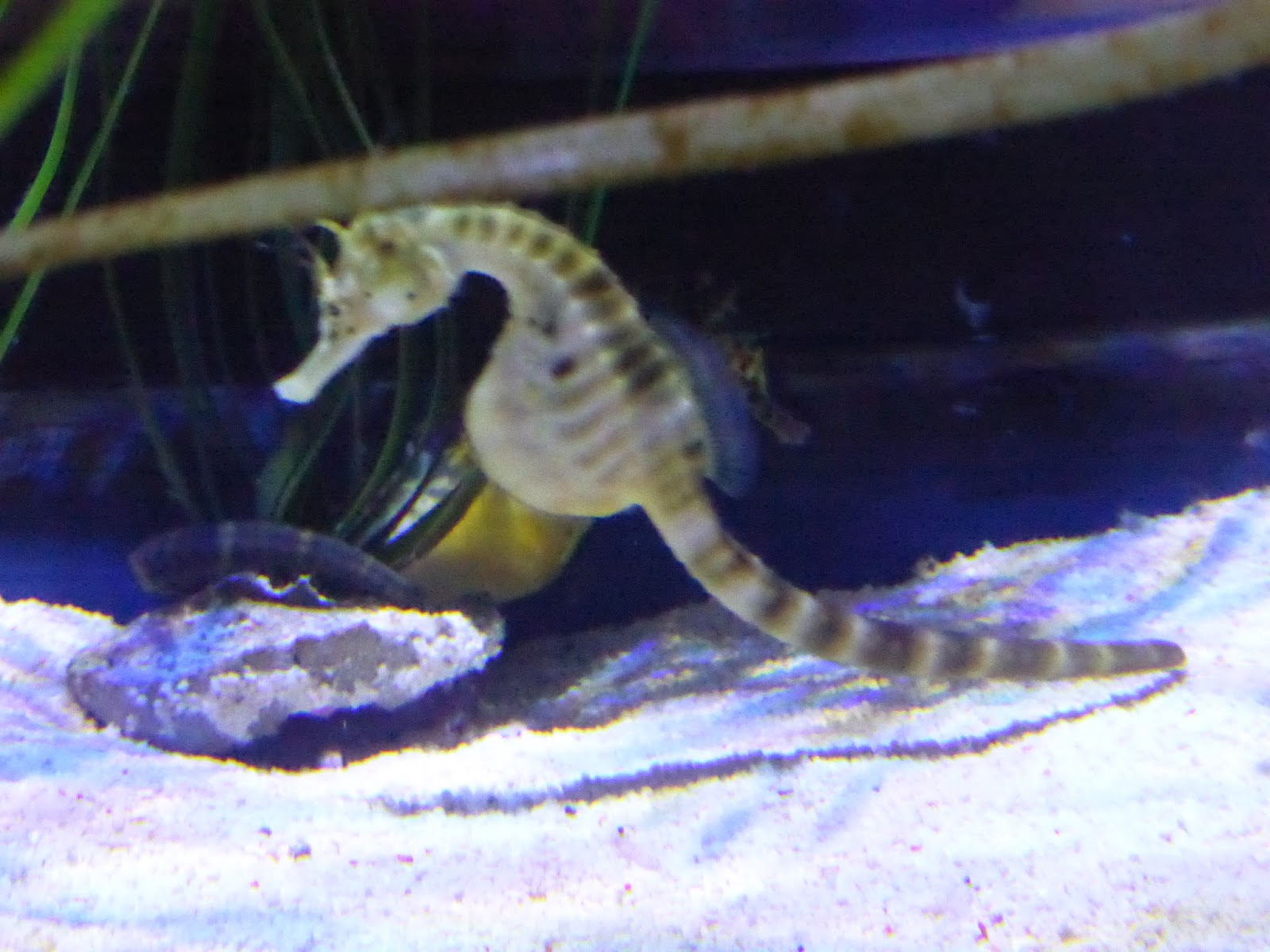
This is a photo of a sea horse at the Bristol Aquarium

Bristol Aquarium was an fascinating conclusion to our day. We particularly enjoyed the talk about sea horses and feeding the rays. It is all completely accessible, with lifts and ramps and several disabled toilets, one operated by a Radar key. The aquarium is a bit different to others that we have visited because it has outside areas that replicated a tropical forest with trees and ponds. It is another place that I recommend visiting.

Tuesday, 27 October 2015

#Laceupforbones in Bath!

This is an image of my shoes with orange laces beside my manual wheelchair.
This is a photo of my shoes with orange laces
beside my manual wheelchair.
Last Tuesday (20th October) I took part in a 'flash mob' style tai chi session in support of World Osteoporosis Day and the National Osteoporosis Society (NOS) Lace Up for Bones campaign. The charity has designed orange laces which supporters can purchase, put on their shoes and spread the word about the campaign through social media. The laces also act as encouragement to take part in exercise which helps keep bones healthy and strong. The Lace Up For Bones campaign was organised by my friend Emma Butler, from Emma Butler PR.


This is an image of the beautiful autumnal scene for our tai chi session. The leaves are shades of reds and oranges. We are standing (I'm sitting in my wheelchair) carrying out a tai chi pose.
This is a photo of the beautiful autumnal scene for our tai chi session.
We arrived in Bath quite early, with autumn sunshine shining down on the beautiful multi coloured leaves scattered around Queen Square. It was a bit chilly, but the tai chi would soon warm us up. Paddy, a Bath tai chi instructor, led the session and it was a perfect way to spend the morning. It was very relaxing, and peaceful (apart from the ambulances that passed by on a few occasions!) and reminded me of the benefits of taking time out from a hectic life. I used to practice chi kung but life has become more busy since then and it's hard to make time for it, but it is important and something I've set a goal to do.

This is a photo of the back of us performing tai chi.
As you can see from the photos, there was a variety of people taking part, including staff from The Francis Hotel in Queen Square who were incredibly supportive and let us use their toilets. I was able to adapt the exercises to my ability while sitting in my wheelchair and Paddy was great at giving discreet guidance ensuring I was fully included throughout the session.
This is an image of the tai chi session at Queen Square. Everyone is standing with their hands help up - I am in my manual wheelchair while carrying out the exercise.
This is a photo of the tai chi session at Queen Square.


This is a photo of Bath Abbey looking at it from outside the front entrance
This is a photo of Bath Abbey
After the tai chi session we enjoyed exploring the sights and shops in Bath. We had a delicious lunch outside at the Roman Baths Kitchen with a picturesque view looking out to the Abbey and the Roman Baths and music played by the buskers. Whilst the streets of Bath itself are not the most wheelchair friendly at times - the pavements are cobbled in places, quite narrow and a lot are rather uneven with few drop kerbs, all the staff of the places we visited were incredibly helpful. The Francis Hotel assisted us into the hotel with a portable ramp and the toilets have doors that open by pressing a button which makes it very easy when you use a wheelchair. The Roman Baths Kitchen has a through floor lift leading downstairs to the toilets which made it fully accessible. I was surprised to see the lift because the buildings are so old. Thank you everyone in Bath for making us feel so welcome.

If you would like more information about the campaign, the NOS has set up the Lace Up For Bones website where people can share their laces photos and win prizes. The money raised from selling the laces will go towards helping the three million people in the UK affected by osteoporosis. Check out the website, share your photos and Lace Up for Bones!

Thursday, 15 October 2015

Dogs For Good - the rebranding of Dogs for the Disabled

Today is a special day as the assistance dog charity Dogs for the Disabled is rebranded to Dogs for Good. Dogs for Good is an amazing charity, it has trained over 750 dogs in the last twenty seven years and these have helped enrich the lives of many people with disabilities. They have changed their name because the dogs are trained for more varied roles. As well as training assistance dogs to help people with disabilities and children with autism, they provide advice and support to people on how their pet dog could benefit the whole family. They also train activity and therapy dogs to work in the community and schools.

This is a photo of my assistance dog Rowan at Center Parcs in November 2007.
I have benefited from Dogs for Good in the past (when they were Dogs for the Disabled), I had an assistance dog called Rowan between October 2002 and July 2009. He was a friendly, lively golden retriever, who helped me in many different ways including help with practical tasks such as picking items up and carrying them, to pulling off my wellies and pulling open doors. He also gave me the confidence to get out and about more independently, I didn't feel like people were staring at me because of my wheelchair and long cane, I believed that they were looking at me because I had a very clever, gorgeous dog!

We had many amazing adventures as a result of our partnership, one time we went on a London Eye photo shoot to promote the charity, and in February 2008 Rowan was selected  to be one of the dogs for Royal Mail's Working Dogs stamp issue. He was on the 1st class stamp! It was amazing, especially because in the auditions he was so over excited that I thought he was running too quickly with the letter that he had to give to me. It was like being with an overexcited child!

Rowan was brilliant, I have many fond memories of him and he will always have a special place in my heart.

Dogs for Good welcome any support you can give them, they receive no government funding so are entirely reliant on donations, fundraising and volunteers. It costs £12,000 to fund a puppy to being a fully trained adult and £20,000 to fund a dog for its entire working life. If you would like to find out more about Dogs for Good, you can visit their website: www.dogsforgood.org

Monday, 7 September 2015

Traffic and training

It was a big day today because I worked with Wiltshire Sight to present Looking Out for Sight training to staff at a local care home. It was the first time I had done this and it is an exciting new part of my disability consultancy.

The journey to the care home was interesting, I caught my usual bus, however I got off at a different, slightly later stop. This was rather scary because of the unfamiliar surroundings and possible mobility access problems. Once I was on the bus, the driver said that there were steps at the stop that I wanted to use which was a bit concerning! The bus driver was helpful and parked just after the bus stop so that it was feasible for me to get off the bus. The only problem was that to cross the road to the care home, I needed a drop kerb for my wheelchair and this forced me to come off the end of the pavement, onto the road. It was very busy, the bus had caused the traffic to become congested and there was a large lorry too which was causing similar problems. There was so much traffic and it rather unnerving and worrying, I wasn't sure how to get across safely in case a car appeared from an unexpected place. However, one positive result from the congestion was that the cars weren't really moving and one car driver gestured that I could cross so I was able do this safely and arrived at the care home feeling rather relieved.

We delivered two training sessions, both were varied slightly because the participants asked different questions. It was really enjoyable and also very rewarding to know I am helping other visually people through informing their carers about the difficulties their sight loss can cause and how they may be able to assist them.

The journey back home was easier, I had to go from the care home to the high street where I would catch a bus back home. For some unknown reason there was not a bus back home from the bus stop by the care home.It did mean I was again travelling down an unknown road, but it was less eventful than earlier and it was easy to find my way to the high street.

Today's training gave me a confidence boost, I was in completely unfamiliar surroundings with uncertainty about visual and mobility access but I got there independently and I was able to carry out my role effectively. It felt so rewarding and I look forward to future training.

Wednesday, 2 September 2015

Cash Point Conundrum

I had a real problem when out in town today. There are about three particular cash point machines in the high street that I like to use because many are positioned too high for me to see from my wheelchair or the screen is at the wrong angle causing a lot of glare and reflection. Unfortunately that number has now been reduced to two! One of the most accessible machines, positioned by the market, has been changed and the screen is positioned far too high for me to reach it which proved very frustrating as I then had to travel much further down the high street to get money out.

It is difficult to know what can be done to resolve the problem but it is getting worse not easier and it is really inconvenient!

Update: At the time of writing this post, I was using my old electric wheelchair because my regular electric wheelchair had a broken bearing. My old wheelchair has a lower seat which is why I had problems accessing the cash machine. It was only when my regular electric wheelchair was repaired that I realised it is much higher and that meant I could reach the cash point that I was referring to in my post. However, it is still an important point there were will be many wheelchair users, especially those using manual wheelchairs who would not be able to access the cash point.